In this article
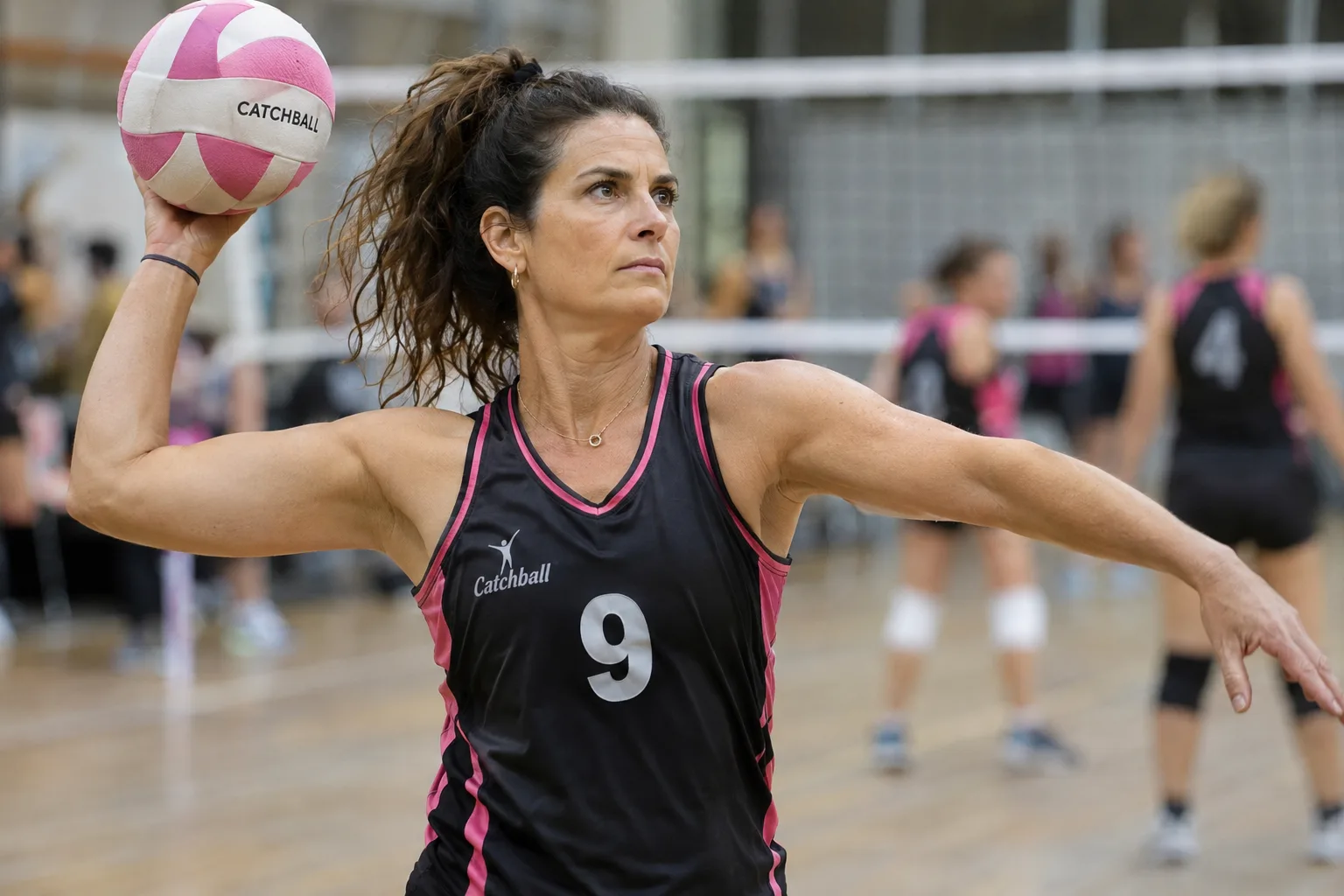
The serve is the only moment in catchball when you control the ball completely. Under the official rules, the right-back player throws from the serving zone behind the end line and has 5 seconds after the whistle.
Build your serve in three stages
- Safe: an overhand throw that lands deep in the middle of the court, 9 times out of 10.
- Deep: aim for the last two meters before the end line, where receivers have least time.
- Tactical: serve to the seam between two players, or to the player who just came on.
Remember the faults: the ball may not touch a teammate, must cross between the antennae, and teammates may not screen the server. And the opponents are not allowed to block a serve.
The five most common serving faults
- Stepping on the end line before release.
- Taking too long: under ICF rules you have 5 seconds after the referee’s whistle.
- Hitting the net or the antenna.
- A teammate screening the server from the receivers.
- Serving out of rotation order.
 RelatedThe second pass: how to set up the perfect catchball attack
A 10-minute serving routine
- 2 minutes: easy serves to the middle from mid-court.
- 3 minutes: from the end line, aim for zones 1, 6 and 5 in turn.
- 3 minutes: pressure serves; your partner calls a zone just before you throw.
- 2 minutes: game simulation, one serve, then sprint to your defensive position.
Technique, step by step
- Stand behind the end line, feet shoulder-width apart, the foot opposite your throwing arm in front.
- Hold the ball with both hands at chest height and pick a target zone before the whistle.
- After the whistle, bring the ball back over the shoulder with the elbow high.
- Step forward with the front foot and rotate the hips and shoulders toward the target.
- Release above head height and follow through toward the target.
Three serves every team should have
| Serve | What it does | When to use it |
|---|---|---|
| Deep and safe | Lands in the last two meters | Most of the time; after a timeout |
| Short | Drops just behind the attack line | When receivers stand deep |
| Seam | Lands between two receivers | Against teams that do not call the ball |
Serving under pressure
At 23–23 most serving errors come from rushing, not from technique. Build a routine you repeat every time: the same number of bounces or breaths, one look at the target, then the throw. A routine gives the mind something familiar to do when the score is tight. Remember that a serve in play is almost always better than an ace attempt that goes out.
Tracking your serve
Keep a simple tally for a month: serves in, serves out, serves into the net, and serves that forced a weak catch. Aim for at least 9 of 10 in play before adding power or riskier targets.
Frequently asked questions
How long do you have to serve in catchball?
Five seconds after the referee’s whistle under ICF rules; Mamanet’s rulebook allows eight.
Enjoyed it? Share it with your team