In this article
Under the official rules you may hold the ball for one second at most and take only one step after catching if you throw without jumping. That makes the catch the most important technical skill in the game: a clean catch buys you time, a fumbled one costs a point.
The four keys
- Get behind the ball with your feet first, so your hands do not have to reach.
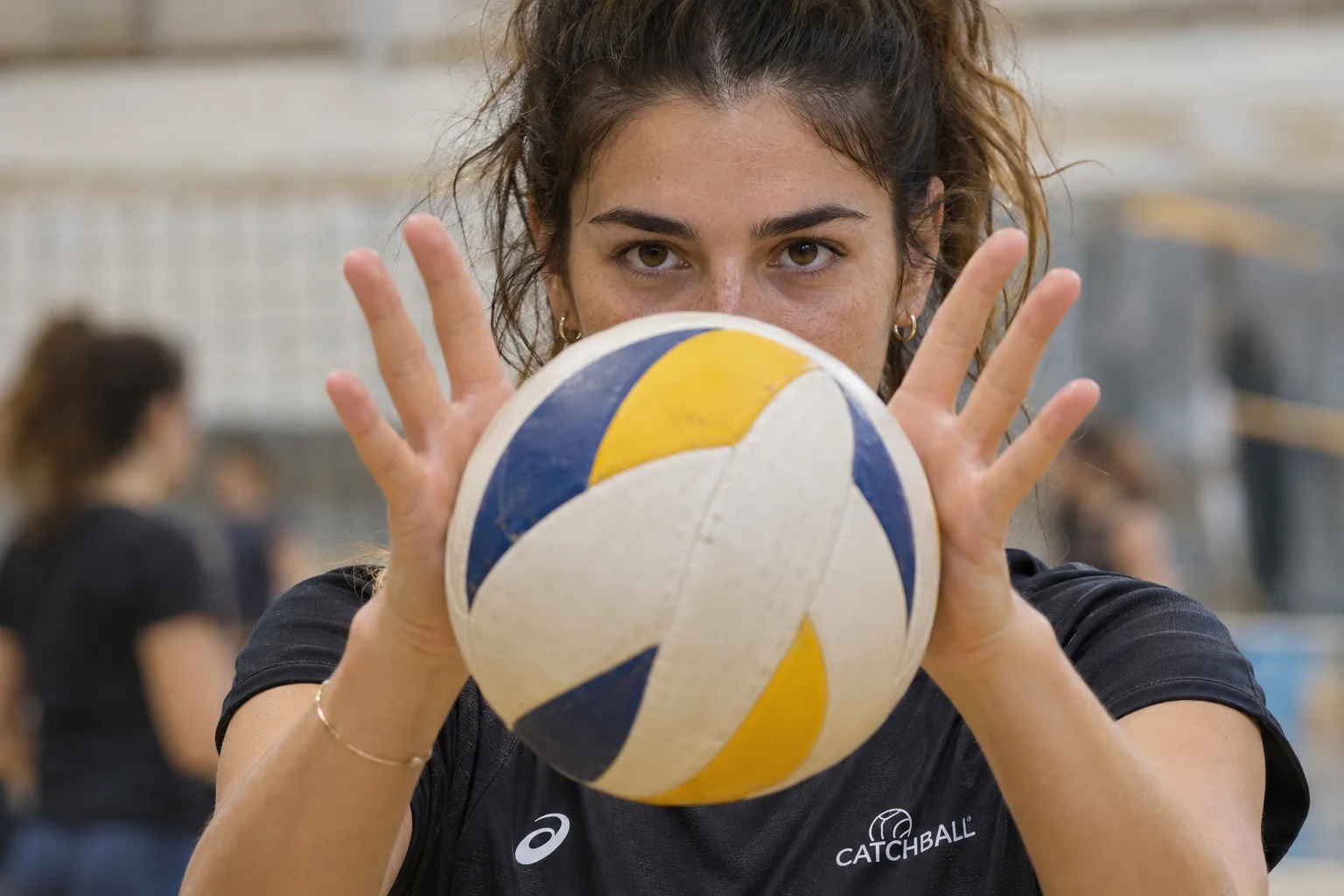
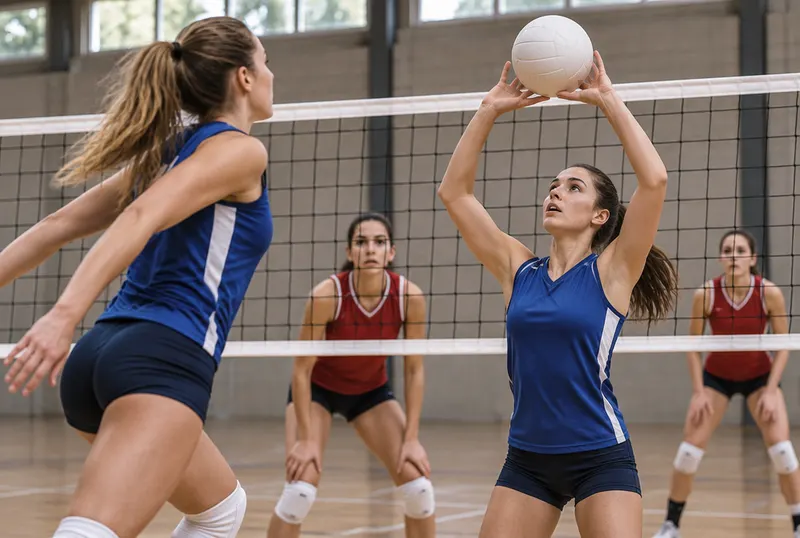
- Hands up early, thumbs and index fingers forming a “W” behind high balls; open palms to scoop low balls.
- Soft hands: let your elbows bend as the ball arrives to absorb its speed.
- Catch in front of your body, already turning toward your target, so the release follows immediately.
Wall catches
Throw against a wall from 3 m and catch 30 times in a row. Then move closer to speed it up.
One-second count
In pairs, a partner counts “one” on each catch. Release before the count ends.
Low-ball scoops
Partner throws at knee height to either side. Step, bend and scoop with open palms.
Five catching mistakes and their fixes
| Mistake | Fix |
|---|---|
| Stiff fingers pointing at the ball | Spread fingers, thumbs and index fingers forming a “W” behind the ball |
| Catching with straight arms | Bend the elbows and draw the ball toward you to absorb it |
| Standing still | Move your feet first so the ball arrives in front of your face |
| Watching the thrower, not the ball | Track the ball all the way into your hands |
| Holding too long | Count “one” and release; you have one second |
 RelatedThe second pass: how to set up the perfect catchball attack
Three catching drills
- Wall catches: 50 throws against a wall from 3 m, catching at forehead height.
- Partner pressure: your partner throws to your left, right and low in random order for one minute.
- Catch-and-release: catch, turn 90 degrees and pass to a third player before the coach counts “one”.
Catching high, low and wide balls
Every catch starts with the feet. Get behind the line of the ball first and only then reach for it. A ball that arrives in front of your face is easy; a ball you chase with straight arms is the one you drop.
| Ball | Body position | Hands |
|---|---|---|
| High (above the head) | Feet shoulder-width apart, small step back, chin up | W-shape behind the ball, elbows bend on contact |
| Chest height | Knees soft, weight on the balls of the feet | Fingers spread, thumbs pointing toward each other |
| Low (below the waist) | Bend the knees, not the back; drop the hips | Little fingers close together, palms up like a basket |
| Wide | Shuffle or lunge so the ball stays in front of your body | Both hands whenever possible; one hand only to keep the ball alive |
From catch to release in one second
Because you have only one second, the catch and the next action must be one movement. Good players already know where the ball is going before it reaches them. Before every rally ask yourself two questions: where is my setter, and where is the gap on the other side?
- See the ball leave the server’s hand.
- Move your feet and square your shoulders to the target, not to the ball.
- Catch softly, drawing the ball toward your chest.
- Turn the hips and release toward the target in the same motion.
A four-week catching progression
| Week | Focus | Success target |
|---|---|---|
| 1 | Two-hand catches from a partner at 3 m, high and chest height | 20 in a row without a drop |
| 2 | Low and wide balls, shuffling to the ball | 15 of 20 clean catches |
| 3 | Catch and release within one second to a third player | No holding calls in 2 minutes |
| 4 | Serve receive from a real serve, then pass to the setter zone | 7 of 10 passes reach the setter |
Coach’s notes
- Film one practice on a phone: most catching problems are visible in the feet, not the hands.
- Use a softer ball for beginners in the first weeks; switch to the match ball once catches are clean.
- Praise a good platform and early movement, not only the clean catch. The habits create the results.
Enjoyed it? Share it with your team