To play catchball, two teams of 6 face each other across a volleyball net. You catch the ball with both hands, take at most one step, and pass or throw within one second. Your team has up to 3 contacts to send the ball over the net so it lands on the other side. If you can catch and throw, you can play: start with the ready position, safe two-handed catches and an overhand throw serve.
1. What you need
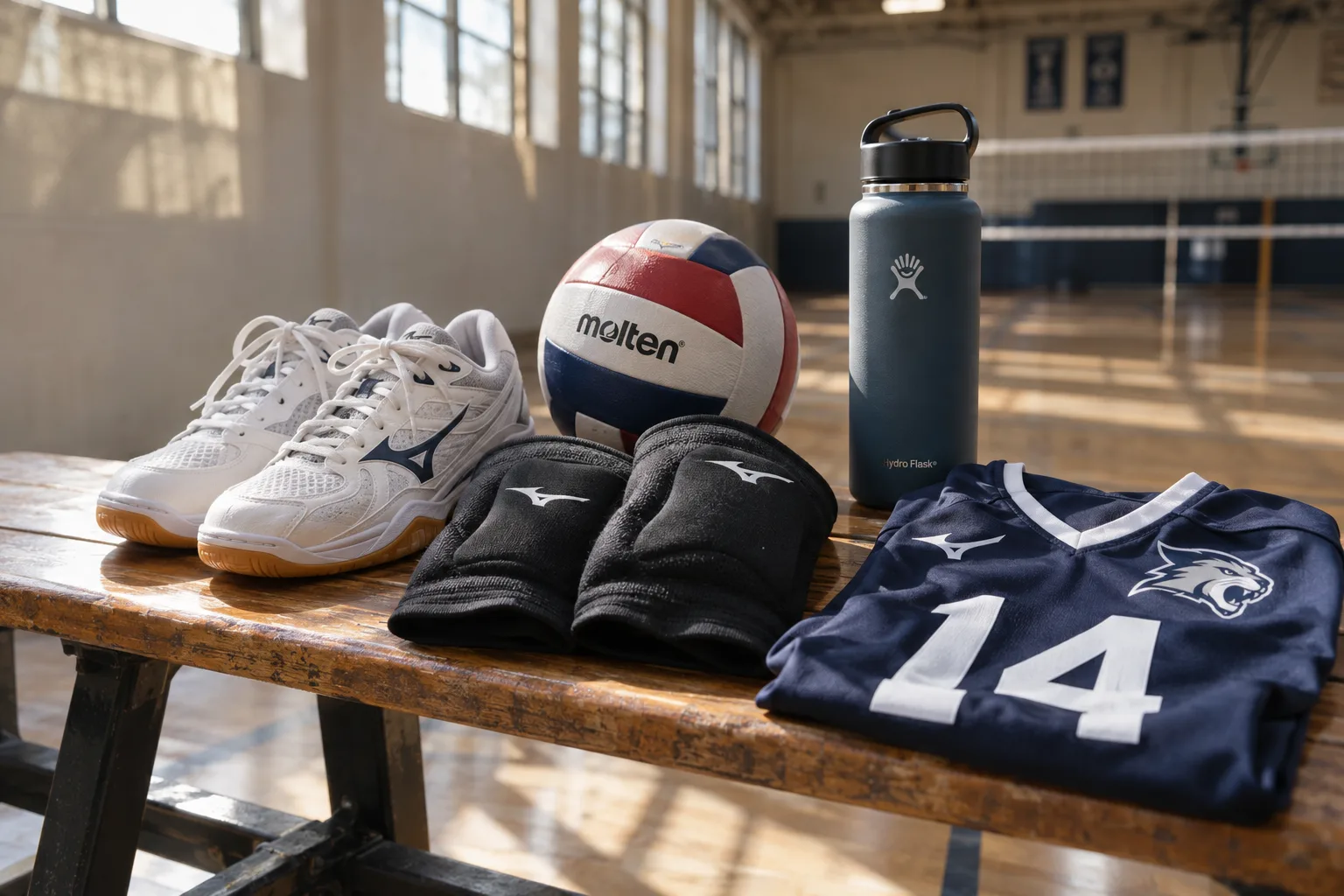
- Indoor court shoes with grip and side support (not running shoes).
- Comfortable sports clothes; leagues use numbered team shirts.
- Knee pads: optional, popular for low catches.
- A volleyball-size ball (65–67 cm, 260–280 g) and a net at 2.24 m.
2. The ready position
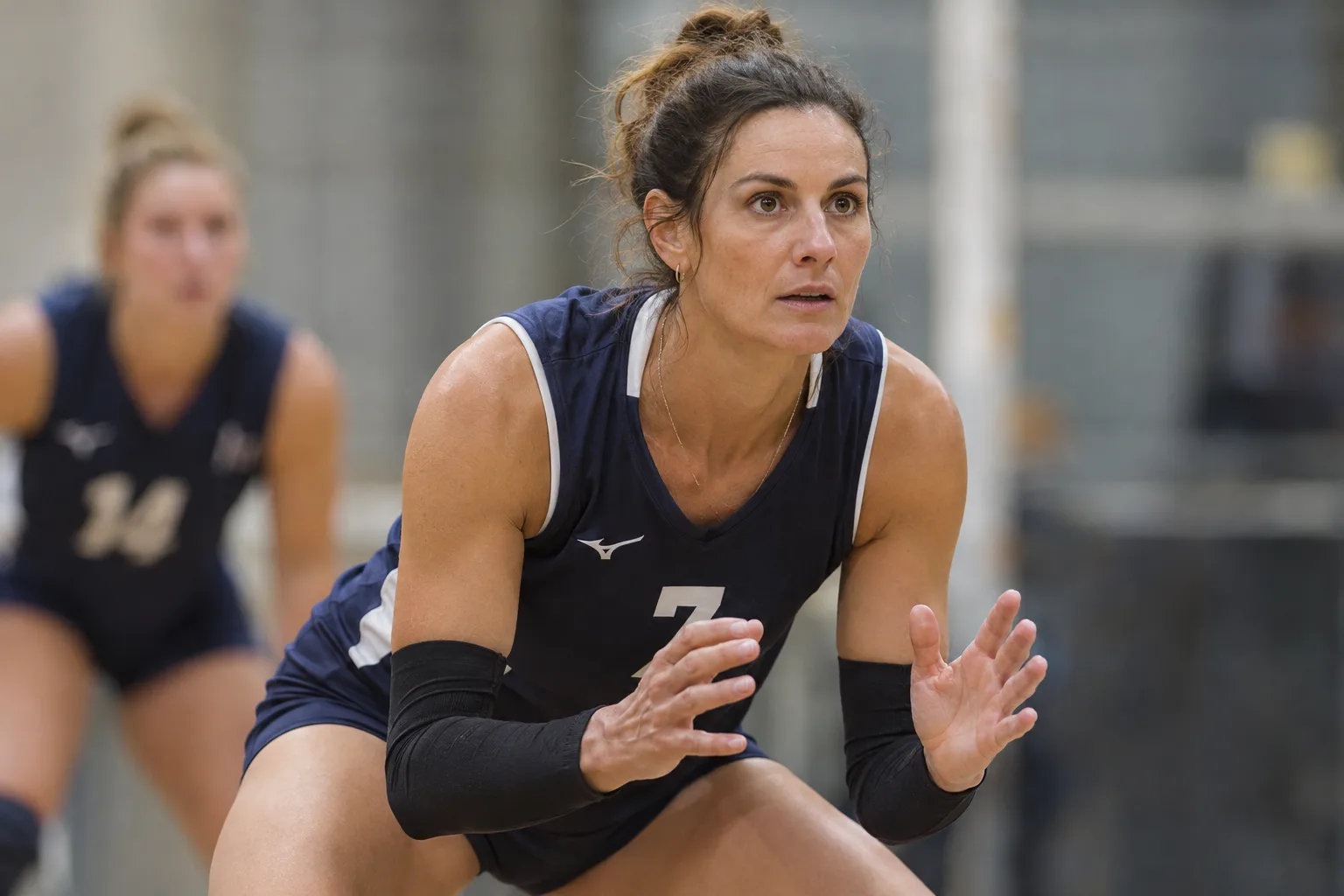
Every rally starts here. Feet shoulder-width apart, knees slightly bent, weight on the front of your feet, hands up in front of your chest with palms forward. From this position you can move in any direction and catch early.
Check it
A partner should be able to push you gently from any side without you losing balance.
Common error
Standing tall with hands down. You will always be late to the ball.
3. Catching
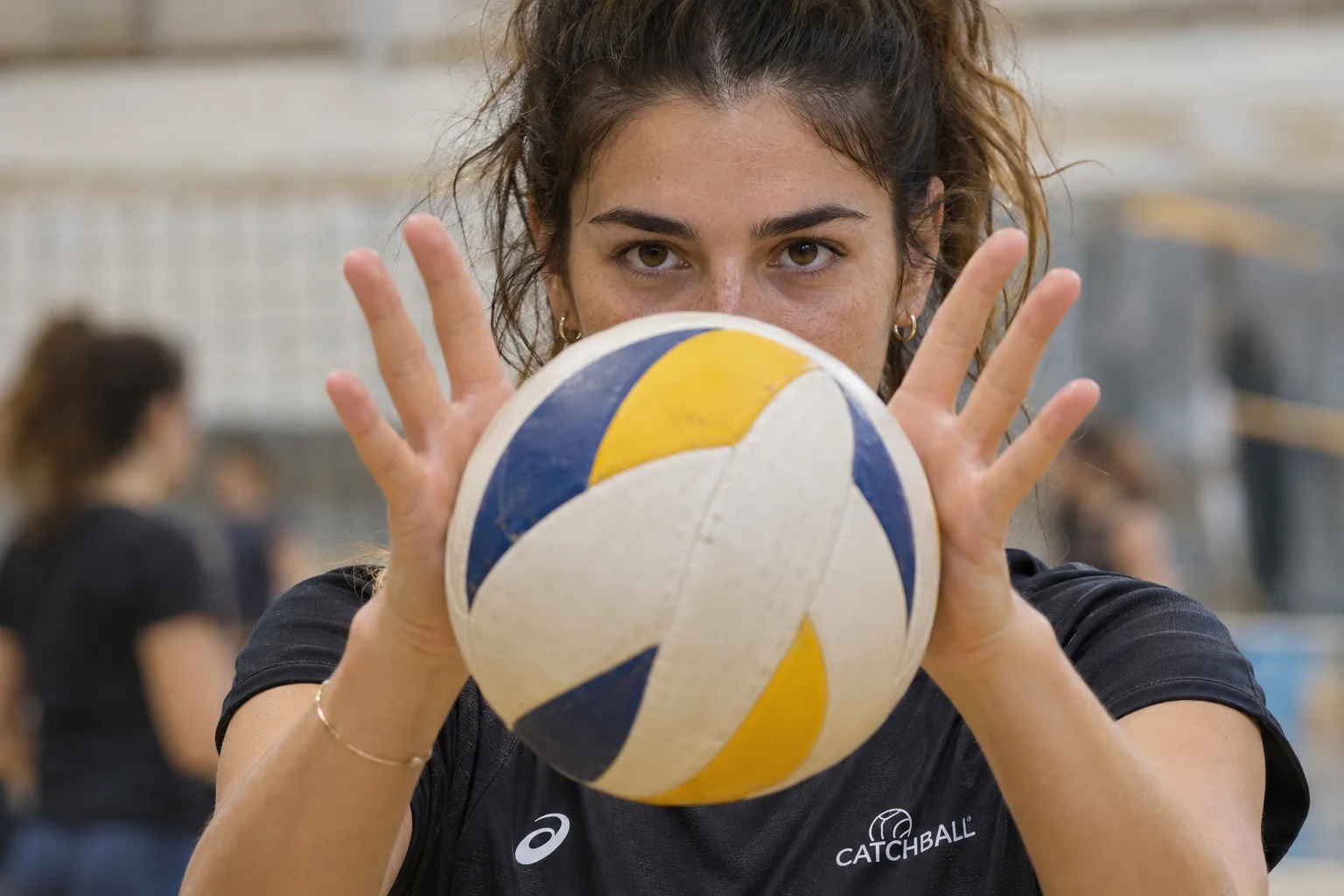
- Move your feet to get behind the ball before it arrives.
- High ball: thumbs and index fingers form a “W” behind the ball.
- Low ball: open palms scoop under the ball, knees bent.
- Soft hands: bend your elbows as the ball arrives to absorb it.
- Catch in front of your body, already turning toward your target.
Remember the clock: from the catch you have 1 second and 1 step (2 steps before a jump throw).
4. Passing to a teammate
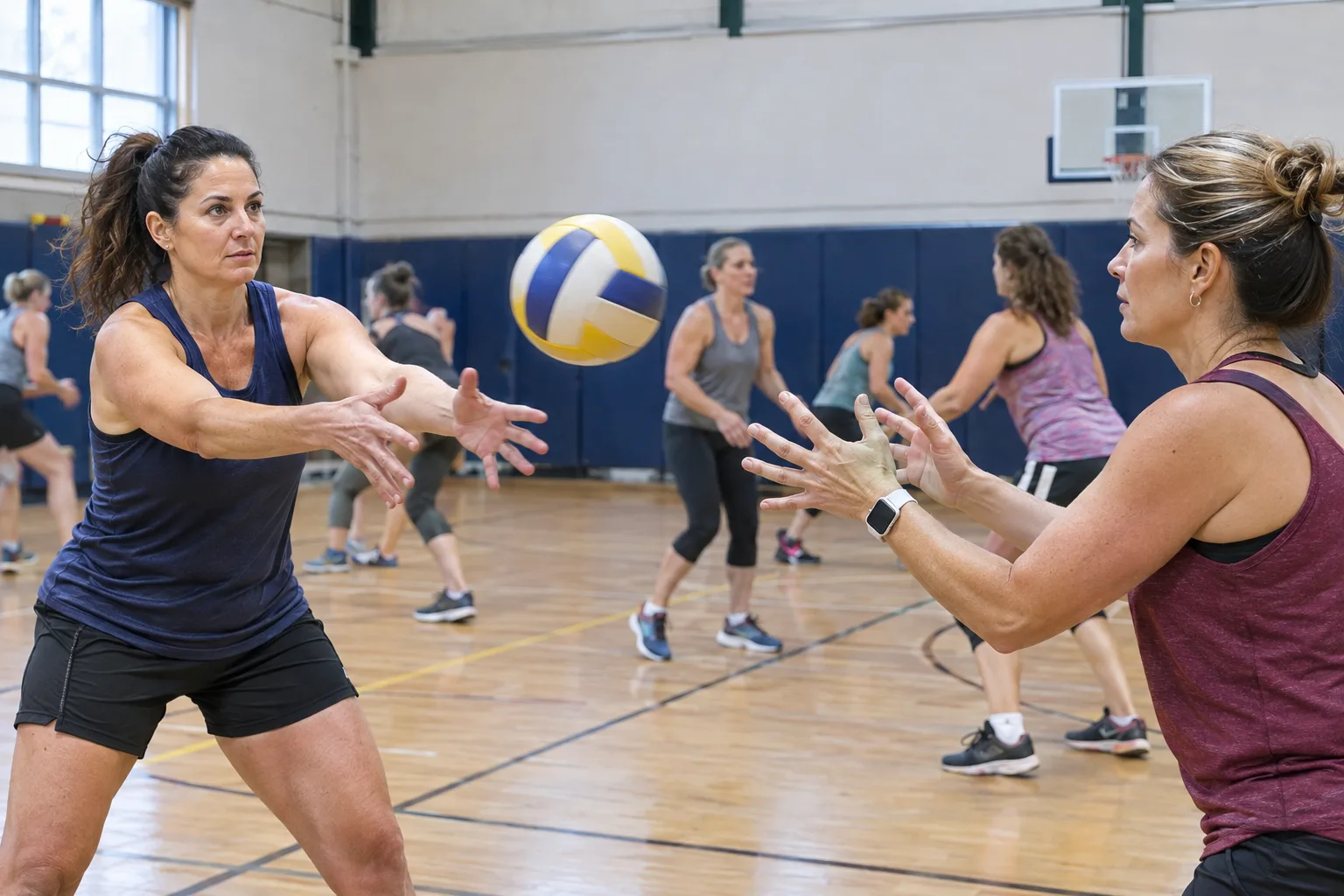
Most passes are two-handed, from the chest or above the head, like a basketball pass. Aim for your teammate’s hands, not her body, and keep the pass flat and soft enough to catch cleanly. The classic pattern is catch, pass to the front row, pass or throw over the net.
5. The attack throw
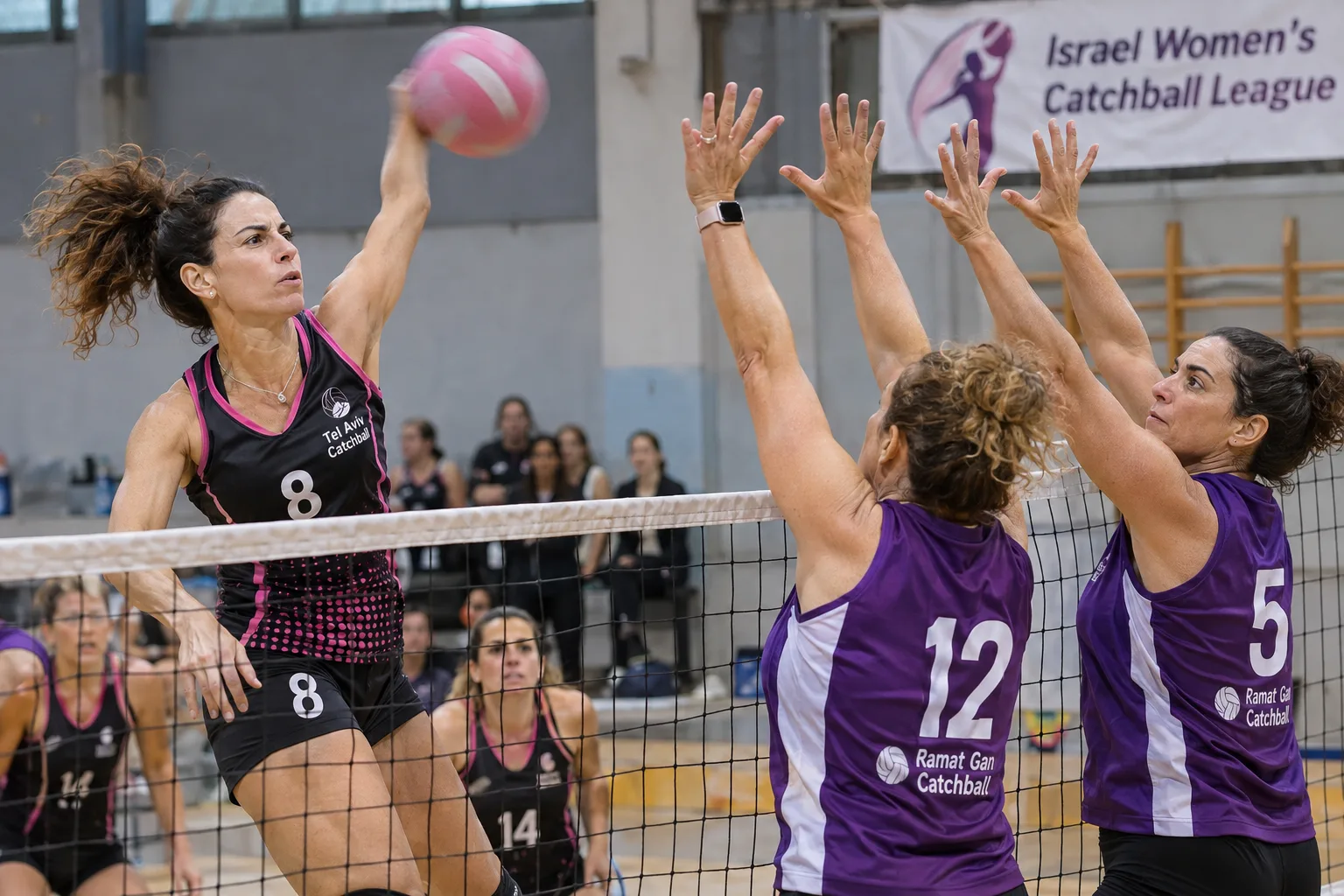
- Front-row players attack. Take up to 2 approach steps with the ball.
- Jump, bring the ball above and behind your head with one hand.
- Throw down and over the net, rotating your hips and shoulders.
- Release before you land. Aim for empty space, the lines, or the gap between two players.
6. Serving
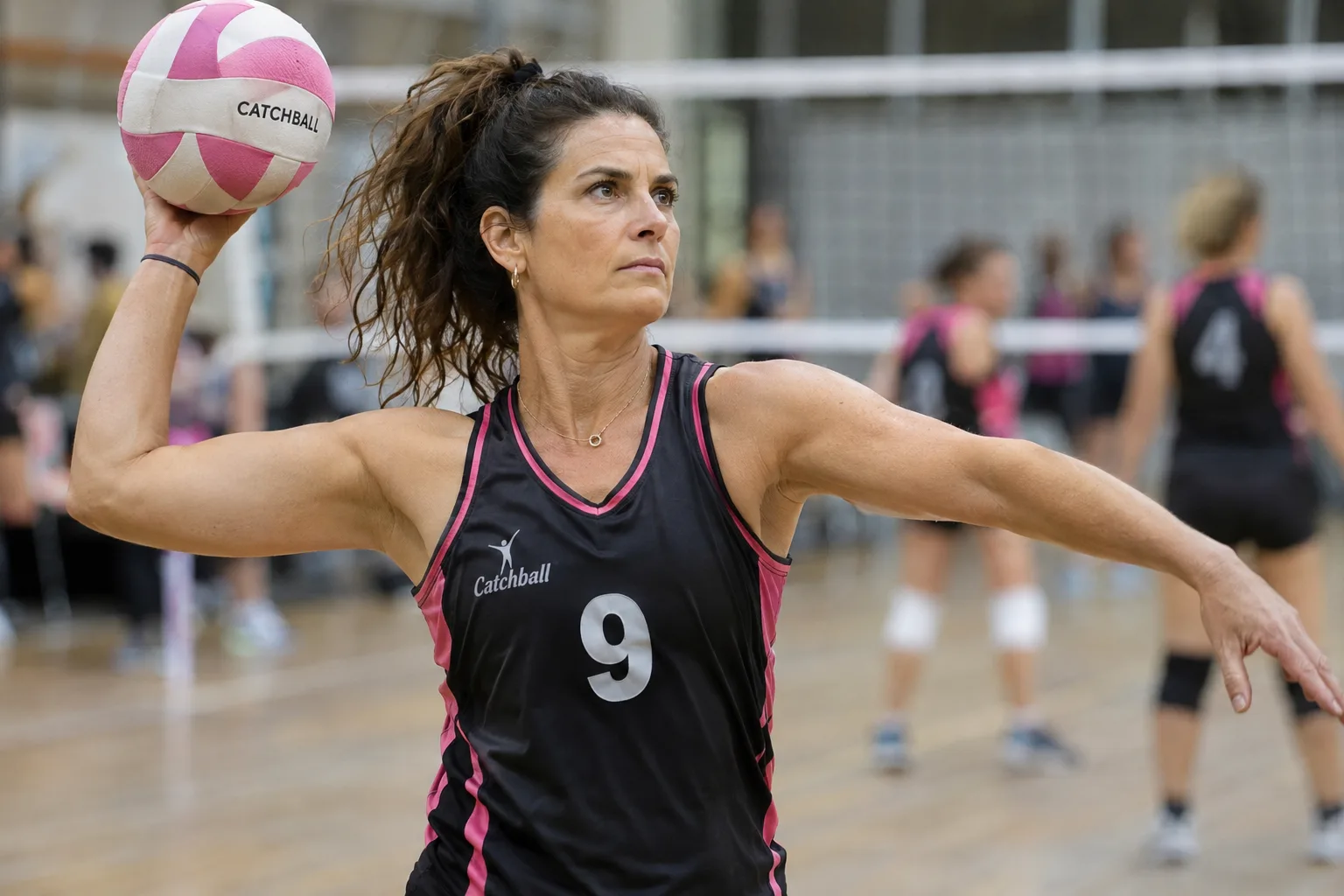
The player in position 1 serves from behind the end line, within 5 seconds of the whistle (8 in Mamanet). Start with a safe overhand throw that lands deep in the middle of the court; add power and placement once you serve in 9 times out of 10.
7. Positions and rotation
- Back row: receive serves, defend deep balls, pass forward.
- Front row: build the attack, throw over the net, block.
- Everyone rotates, so everyone plays every position during a set.
8. Defense and communication
Most points for beginners are lost between two players who both think the other will take the ball. Call “mine!” loudly and early. Before each serve, agree who covers the seams between players, and after every point look at your teammates: a quick word keeps the team organized.
9. Your first game, step by step
- Warm up for 10–15 minutes: jogging, dynamic stretches, catching in pairs.
- Check your starting position on the rotation sheet before the first serve.
- On defense: ready position, watch the thrower, call the ball.
- With the ball: catch, count “one” in your head, pass or throw.
- After each rally: check whether your team rotates.
- After the game: a short cool-down and stretch.
10. Common beginner mistakes
| Mistake | Fix |
|---|---|
| Walking with the ball | Plant your feet before you catch |
| Holding too long | Decide where to throw before the ball arrives |
| Two players, one ball | Call “mine!” early |
| Hard serves that go out | Serve safe and deep first |
| Touching the net | Jump up, not forward, when attacking or blocking |
Frequently asked questions
Do I need sports experience to play catchball?
No. If you can catch and throw a ball, you can join a beginner team and improve quickly.
Is catchball only for women?
In many countries it is played mainly by women, often mothers and women over 30. In others, such as Argentina and Mexico, men’s and mixed teams also play.
How long does it take to learn?
Most beginners can play a full game after one or two practices. Reading the game and rotation take a few weeks.
What is the difference between catchball and volleyball?
Same court, net and scoring, but in catchball the ball is caught and thrown, not hit.