In this article
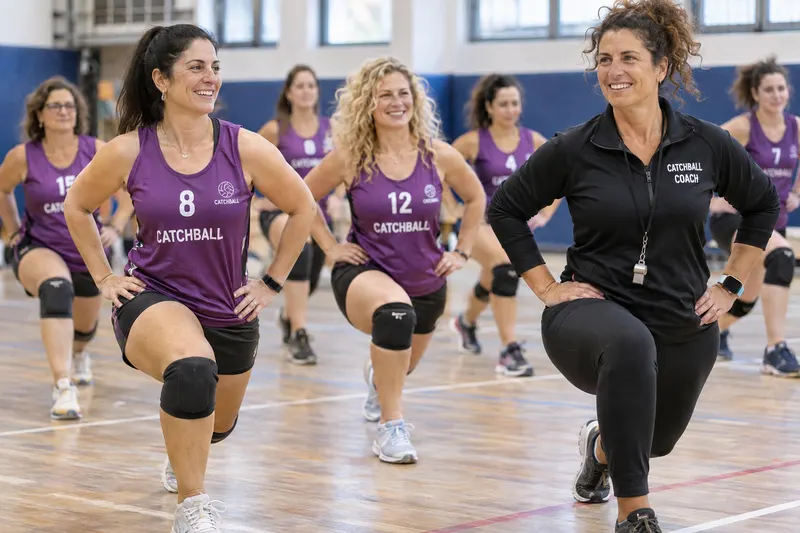
Catchball shares its court, net and movements with volleyball, so volleyball research is the best guide we have. In the Netherlands, an exercise-based warm-up called VolleyVeilig was tested with recreational adult players and led to a trend toward fewer acute injuries; a version for youth players was also evaluated in the British Journal of Sports Medicine.
The common thread: warm up with movements that prepare the body for jumping, landing, sideways movement and throwing, not just a few stretches.
The routine (about 15 minutes)
| Part | Minutes | Exercises |
|---|---|---|
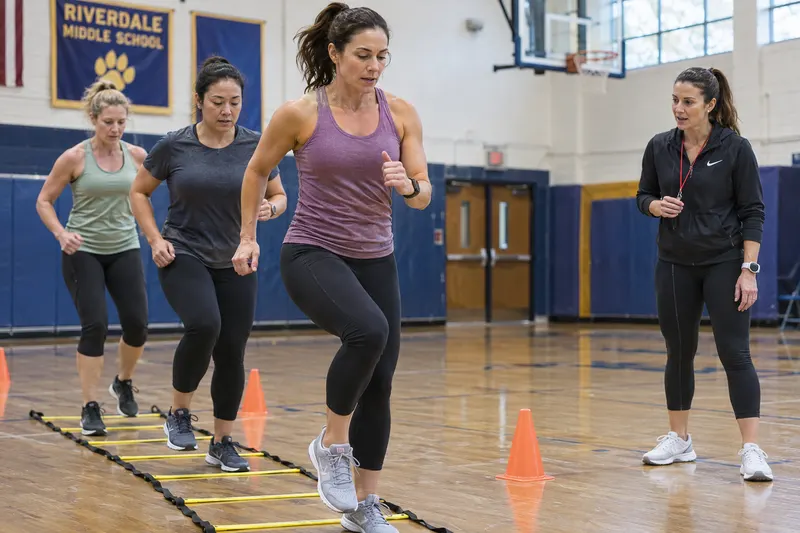
| Pulse raiser | 3 | Easy jog around the court, side shuffles, back pedal |
| Mobility | 3 | Arm circles, hip openers, walking lunges with a twist |
| Balance | 3 | Single-leg stands, then single-leg catches with a partner |
| Landing | 3 | Small two-foot jumps landing softly, knees over toes |
| Throwing prep | 3 | Easy partner throws, increasing distance and speed |
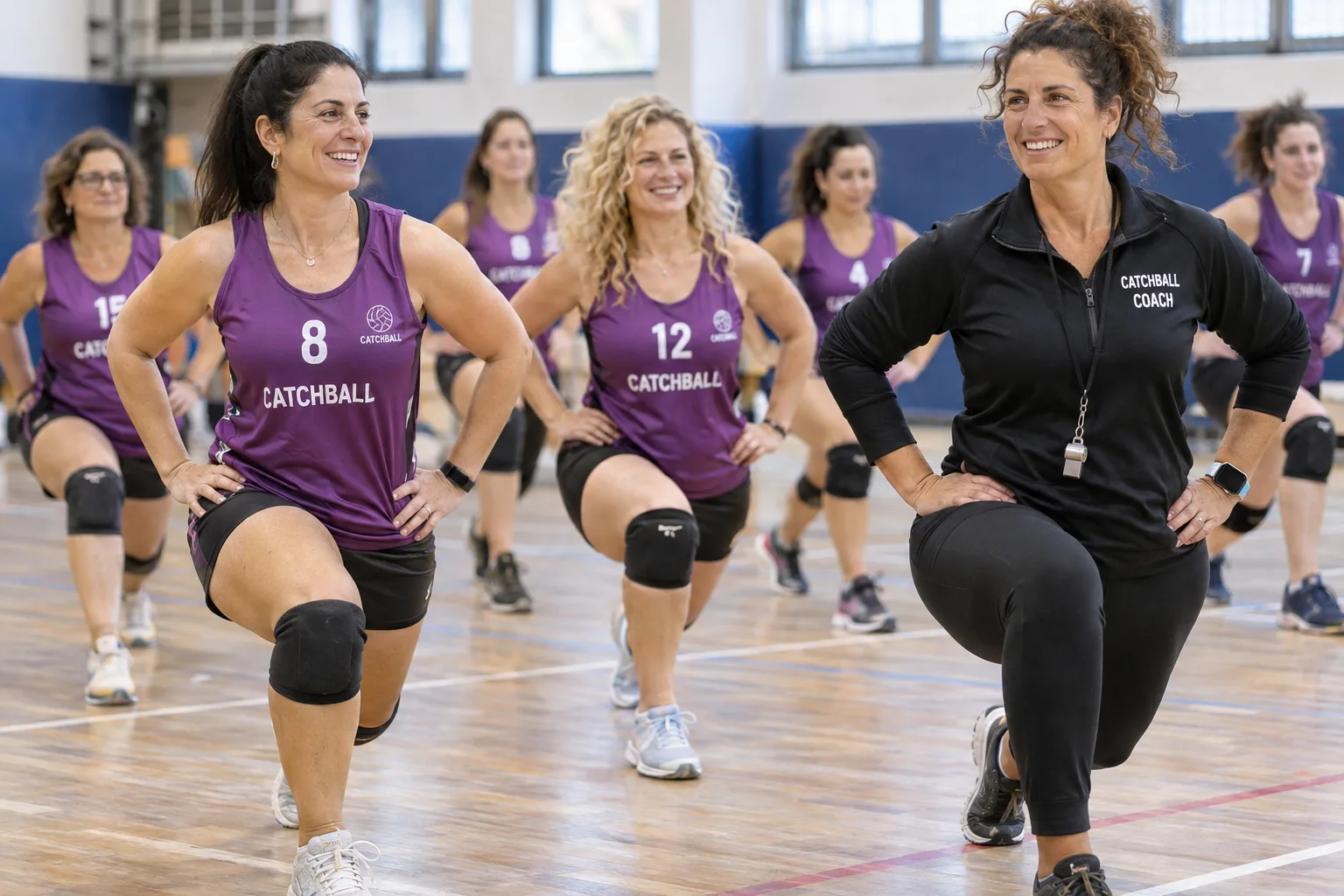
Land quietly
Soft, quiet landings with knees bent mean your muscles, not your joints, absorb the force.
Build up throws
Start short and slow; the shoulder needs time before full attack throws.
Every session
The benefit comes from doing it before every practice and match, not once in a while.
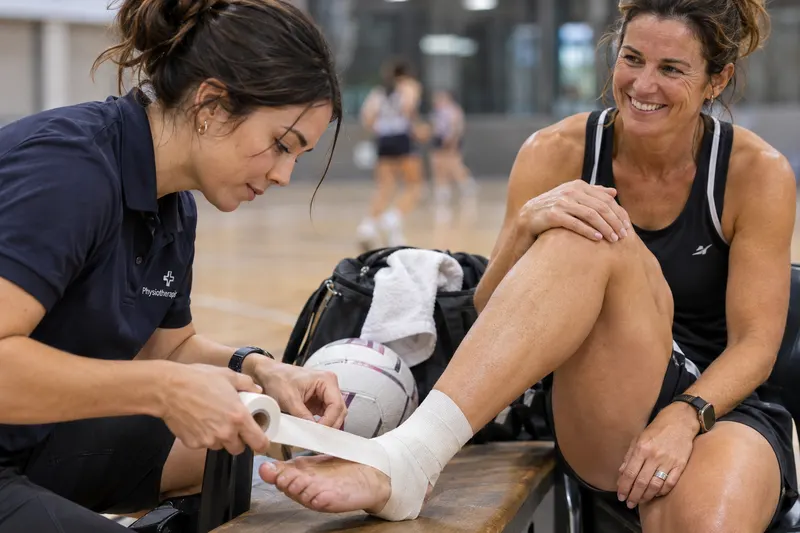
General guidance, not medical advice. If you have an injury or condition, ask a physiotherapist to adapt the routine.
Why the warm-up is not optional
In a study of recreational adult volleyball players in the Netherlands, the VolleyVeilig program, a structured warm-up with balance, landing and shoulder work, was tested against usual practice. Programs of this kind are designed to reduce the ankle, knee and shoulder injuries that dominate net sports, and they take less time than most teams spend chatting before a match.
 RelatedThe second pass: how to set up the perfect catchball attack
Short version for match days (8 minutes)
- 2 minutes: light jogging, side shuffles and back pedal.
- 2 minutes: dynamic leg swings, lunges with rotation, arm circles.
- 2 minutes: single-leg balance and soft two-foot landings.
- 2 minutes: partner catching at increasing distance, then a few serves.
The three parts of a good warm-up
A warm-up for a net sport has three jobs: raise your heart rate and body temperature, prepare the joints that take the most load in catchball (ankles, knees, shoulders and fingers), and switch your brain to ball mode. Skipping any of the three leaves a gap.
| Part | Goal | Examples |
|---|---|---|
| Pulse raiser | Warm muscles, faster heart rate | Light jog, side shuffles, skipping |
| Mobility and activation | Prepare ankles, hips, shoulders | Leg swings, lunges with rotation, arm circles, band pull-aparts |
| Balance and landing | Protect ankles and knees | Single-leg balance, hop and stick, soft two-foot landings |
| Ball work | Hands, eyes and timing | Partner catching, passing in triangles, easy serves |
Finger and hand preparation
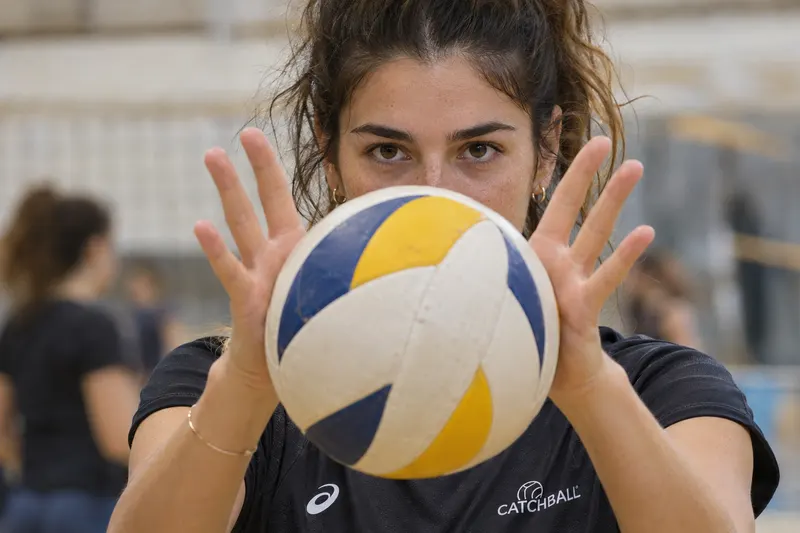
Catchball loads the fingers more than most net sports, because every contact is a catch. Spend one minute on simple hand work: open and close the fists, spread the fingers wide, press the palms together and apart, and catch a few soft balls before anyone throws hard.
Adapting the warm-up
- Cold gym or early morning: add two more minutes to the pulse raiser.
- Players returning from an ankle sprain: double the balance work.
- Tournament days with several matches: repeat a short 5-minute version before each match.
- Players over 50: keep the same structure but lower the jump intensity and extend the mobility work.
Cool-down
After the last whistle, walk for two minutes and stretch the calves, hamstrings, hips, chest and shoulders gently for 20–30 seconds each. A cool-down will not erase soreness, but it is a good moment for the team to reset, drink water and talk about one thing that went well.
Enjoyed it? Share it with your team