In this article
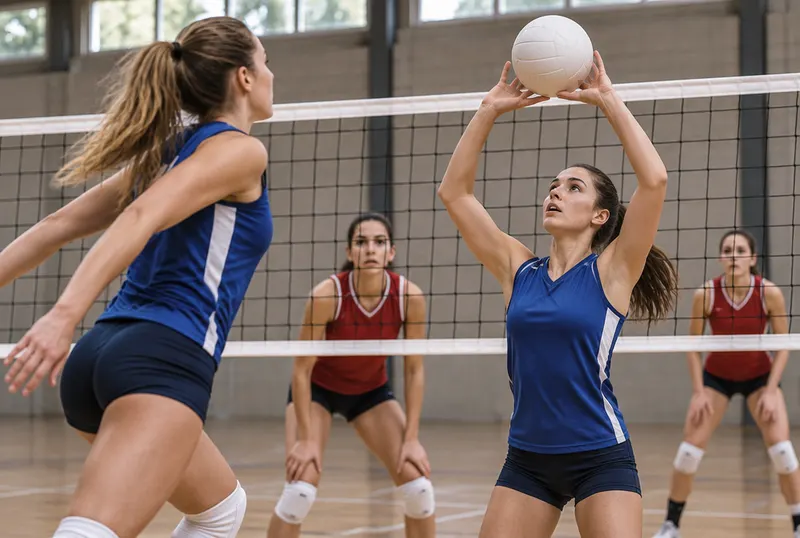
The attack throw
- Receive the pass near the net, already facing your target.
- Up to 2 approach steps with the ball (or 2 steps plus a closing step from two feet).
- Jump up, not forward; bring the ball high behind your head.
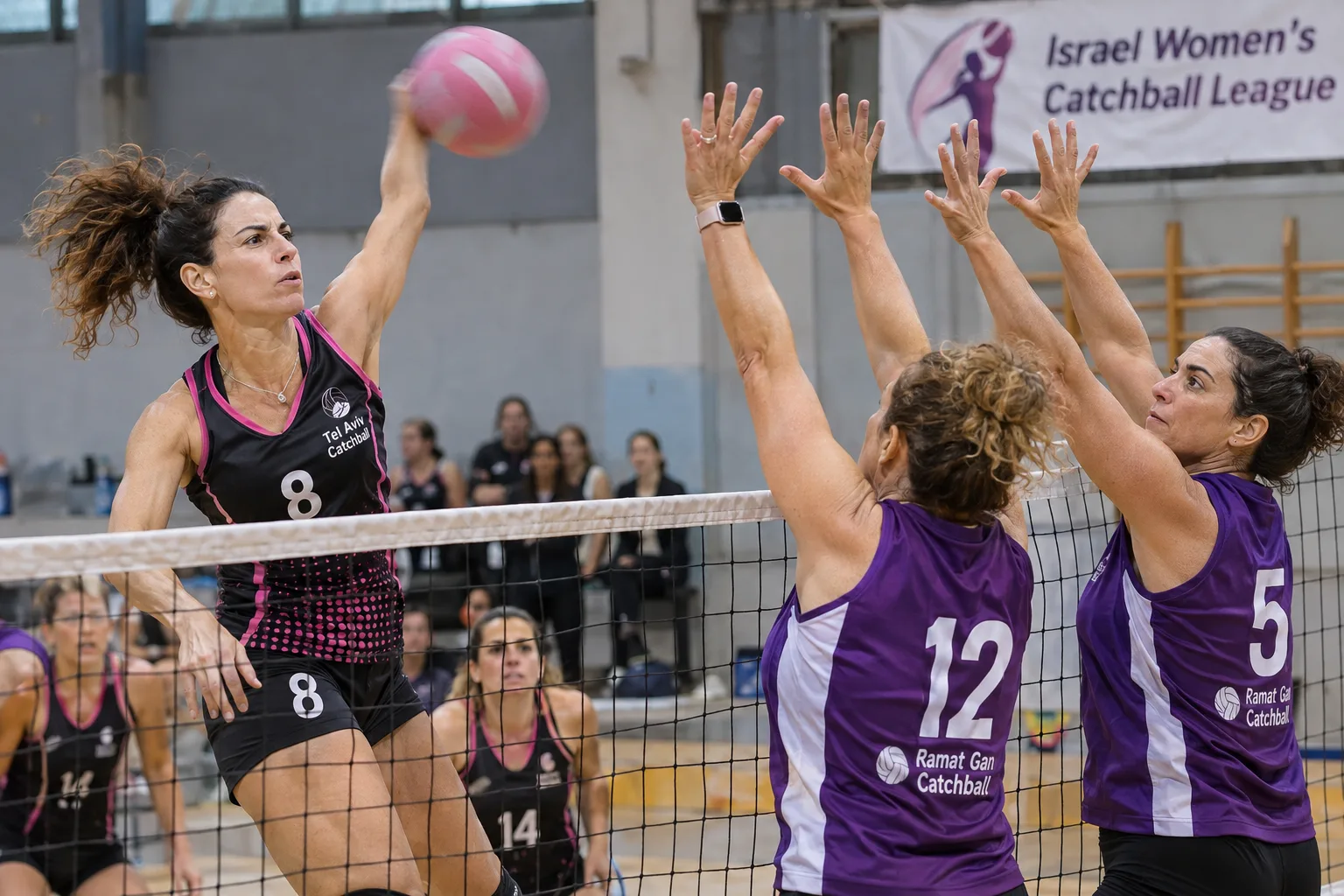
- Throw down over the net with hip and shoulder rotation, and release before landing.
Placement beats power. The best targets are the lines, the deep corners and the seam between two defenders. Change your target often so the block cannot read you.
The block
- Only front-row players may block, with hands above the top of the net.
- Watch the attacker’s shoulders and the ball, not her eyes; jump just after she does.
- Press your hands over the net toward the court, fingers spread and firm.
- Never touch the net, and never block a serve.
- A block is not one of your team’s 3 contacts.
 RelatedThe second pass: how to set up the perfect catchball attack
Where to aim your attack
Power matters less than placement in catchball, because defenders can catch hard throws. The best targets are the spaces defenders have to move to: the deep corners, the seam between two back-row players, and the short zone just behind the block. Look before you jump; you have up to one second with the ball.
| Target | When it works | Risk |
|---|---|---|
| Deep corner (zones 1 and 5) | Defenders playing close to the attack line | Ball landing out |
| Seam between two defenders | Receivers who do not call the ball | Low |
| Short, behind the block | Block jumps early and back row stays deep | Easy catch if read |
Common faults at the net
- Touching the net while attacking or blocking.
- Landing before releasing the ball on a jump throw.
- More than two steps before the jump.
- A back-row player completing a jump attack from the front zone.
- Blocking a serve, which is not allowed.
Drill: attack against a live block
Two attackers alternate from positions 4 and 2 against one blocker. The setter varies the pass height. The attacker scores a point for each throw that lands untouched and loses one for each net fault. Ten minutes, then rotate roles.
The approach, step by step
Under the rules you may take up to two steps with the ball before a jump throw, and you must release before you land. That makes the approach a rhythm you can practice: catch, step, step, jump, throw.
- Catch the set facing the net, ball at chest height.
- First step with the foot opposite your throwing arm, aimed at the take-off point.
- Second step closes the feet and turns the body slightly sideways.
- Jump off both feet, bring the ball back behind the head, and look at the block.
- Throw at the top of the jump and land on both feet on your own side.
Reading the block
At the top of your jump you have a fraction of a second to see what the blockers did. If the block is late, throw straight down the line. If it is closed, throw cross-court or drop the ball short behind it. If two blockers are up, a deep throw to the corner is safer than trying to throw through hands.
Blocking technique
- Stand an arm’s length from the net, hands at shoulder height.
- Watch the attacker’s shoulder and arm, not the ball.
- Jump slightly after the attacker, not with her.
- Reach over the net with both hands, fingers spread, and keep the hands still.
- Land on both feet without touching the net.
Attack and block drills
| Drill | Players | How it works |
|---|---|---|
| Rhythm approach | 1 + coach | Coach sets; player repeats catch, two steps, jump and throw 10 times to a target |
| Line or cross | 3 | Blocker shows line or cross at the last moment; attacker throws to the open side |
| Block timing | 2 | Attacker on a box throws; blocker jumps a beat later and holds the hands over the net |
| Cover the attack | 6 | Live attack; back-row players move in to catch blocked balls |
Frequently asked questions
Can you block a serve in catchball?
No. Blocking or attacking the opponent’s serve is a fault.
Does a block count as a contact?
No. Under ICF rules the block does not count as one of the team’s three contacts.
Enjoyed it? Share it with your team