In this article
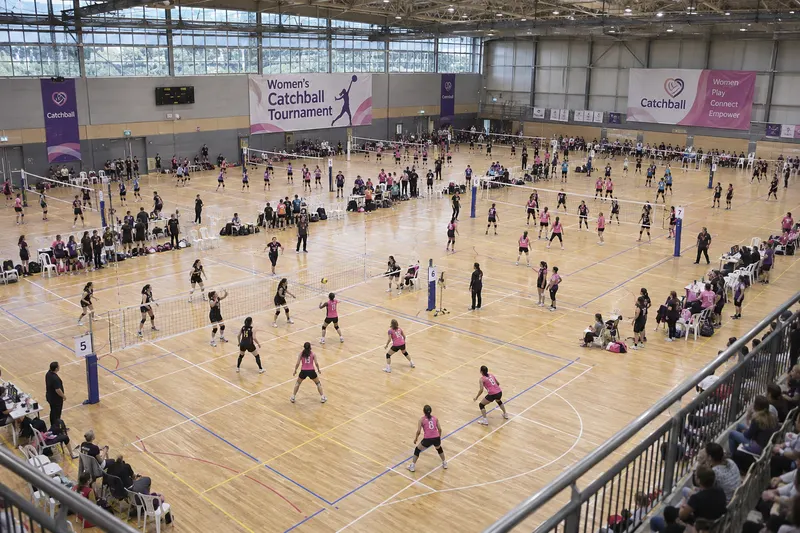
Most women who start catchball have not played a team sport in years, if ever. That is exactly who the game was built for. The ball is caught and thrown rather than hit, so you can take part in real rallies from your very first practice. This guide walks you through a typical first season.
Before the season: finding a team
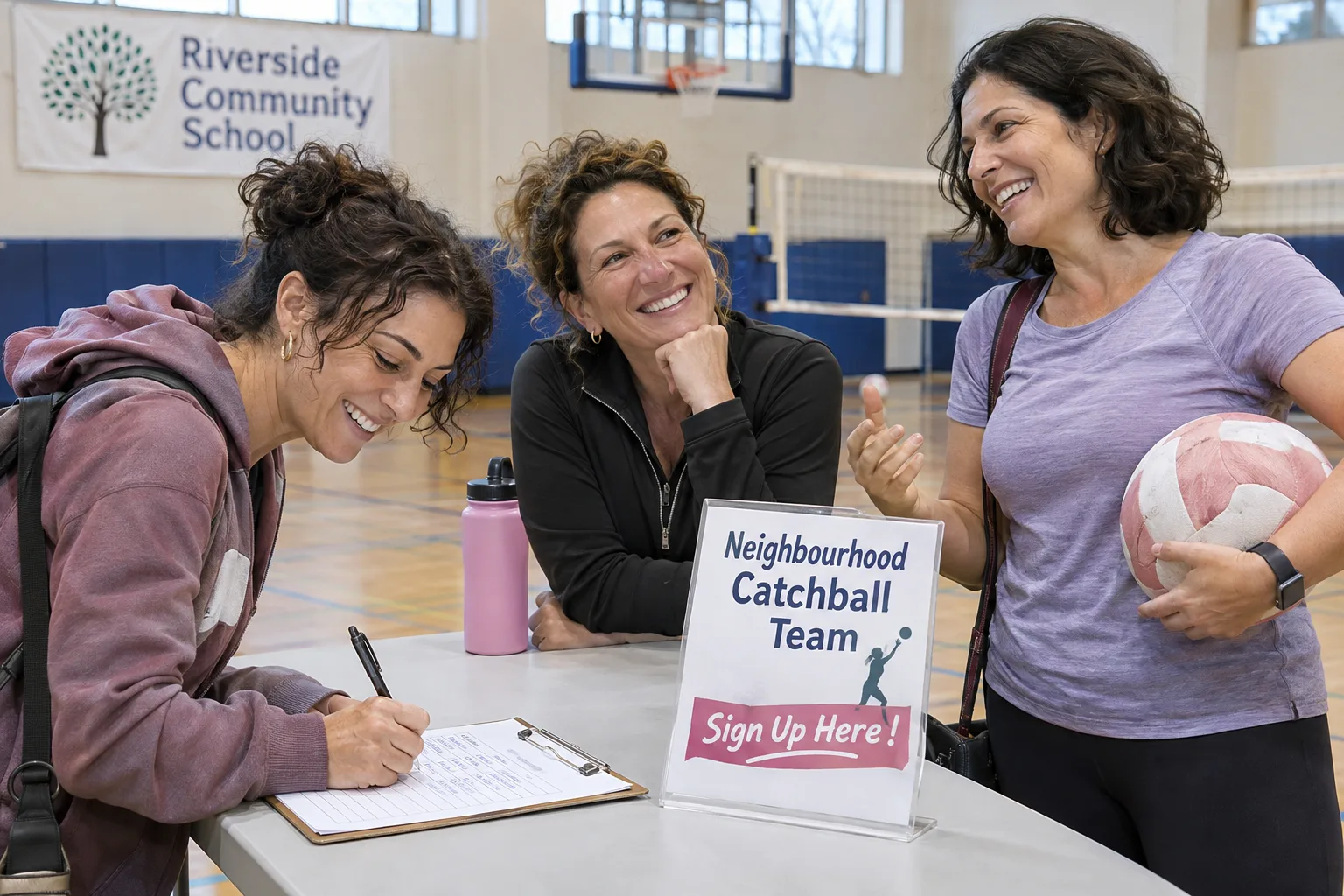
Teams are usually organized through schools, community centers, local authorities or clubs. In Israel, team registration typically opens in July and players are added through October. In the United States, many teams start at a local JCC, and in Canada pick-up nights let you try the game before you commit.
- Ask at your children’s school, community center or the national body (see your country page).
- Go to one practice before you register. Watching is fine; playing is better.
- Ask about the practice night, the league night and the season fee.
What to bring
Indoor court shoes with non-marking soles, knee pads, comfortable sportswear and a water bottle. The team supplies balls and the net. Long nails and jewelry are a bad idea: you will catch the ball hundreds of times in a session.
 RelatedCatchball around the world in 2026: where it is played, by whom and under what name
Weeks 1–4: learning to catch, pass and move
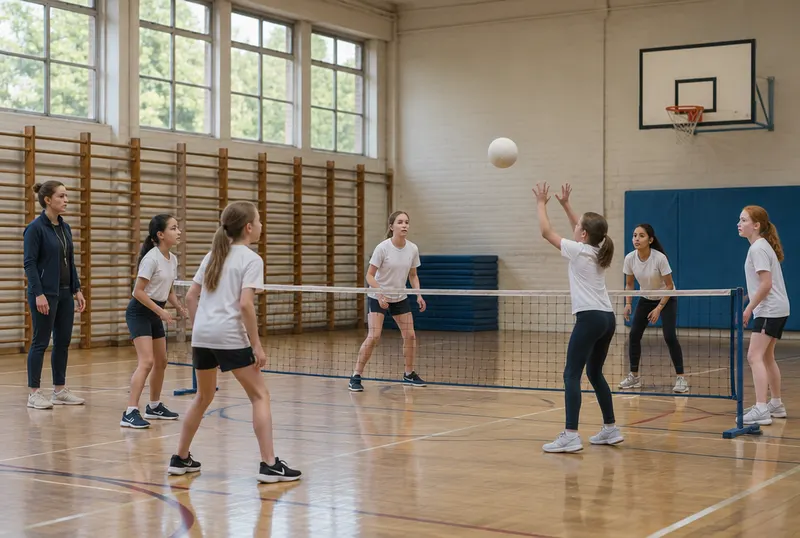
Early practices focus on the ready position, catching high balls with both hands and passing within one second. You will learn the basic team rule that matters most: up to three contacts per side, with no player touching the ball twice in a row. Expect to feel your legs and shoulders the next day; that settles within a few weeks.
Weeks 5–8: serving and positions
Next comes the serve, thrown from behind the end line, and your place in the rotation. Six players stand in fixed positions and rotate clockwise when your team wins back the serve. Your coach will put you in a serve-receive formation so you always know which ball is yours.
Your first match
- Arrive early for the warm-up; it is your best protection against ankle and knee injuries.
- Call “mine” loudly and early. Most beginner errors are two players going for the same ball.
- Release within one second, take at most one step before passing, and two steps before a jump throw.
- If you make a mistake, the next rally starts in seconds. Everyone on court has been there.
Mid-season: playing to your strengths
By mid-season most players find a role. Tall players with a strong arm drift toward the front row and attack throws; quick, steady catchers make reliable back-row defenders and liberos. Ask your coach which drills fit your role and practice them between sessions.
Habits that keep you playing
- Never skip the warm-up; research in recreational volleyball shows structured warm-ups reduce injuries.
- Strengthen ankles and knees with simple balance work twice a week.
- Stay for the social part: teams that spend time together stay together.
- Set one personal goal per month, such as a reliable serve or catching every high ball.
The end of the season
Most leagues finish with a final tournament or a festive last round. Take time to look back: what could you not do in month one that you do now without thinking? Most new players are surprised by how far they have come. Then decide on one goal for next season, whether it is a new role, a better serve or bringing a friend.
Your first-season checklist
- Shoes and knee pads that fit
- Know the three basic rules: one second, three contacts, step limits
- Know your rotation and serve-receive position
- A reliable safe serve
- A warm-up you do on your own
- Teammates’ names and the group chat
Frequently asked questions
Do I need volleyball experience to play catchball?
No. Catchball was designed for women with no sports background; the ball is caught and thrown, so beginners can play real rallies from the first practice.
How often do catchball teams train?
Most recreational teams practice once or twice a week and play one league match a week during the season.
What should I wear to my first catchball practice?
Indoor court shoes, knee pads and comfortable sportswear. Remove jewelry and keep nails short.
Enjoyed it? Share it with your team