In this article
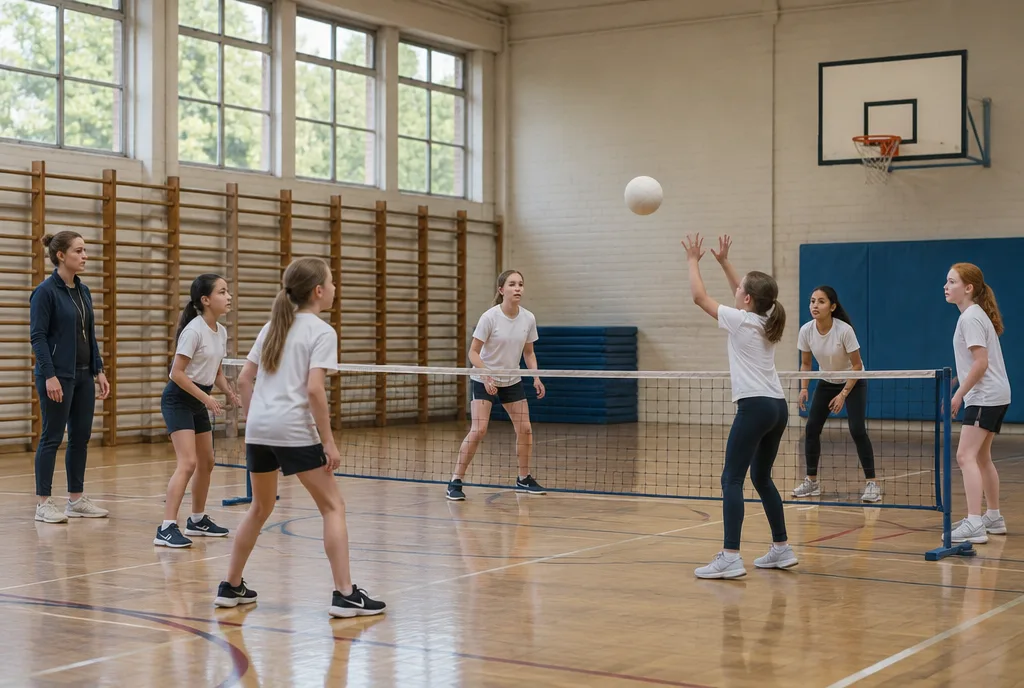
Catchball started life in a school. Clara Gregory Baer, a physical education teacher in New Orleans, created Newcomb ball in 1895 for her students. More than a century later, it is still one of the easiest net games to teach: no painful contact, no complex technique, and every child touches the ball.
Why it works in PE
- Low skill barrier: catching and throwing are skills most children already have.
- Inclusive: shy or less sporty pupils can succeed on day one.
- Leads to volleyball: rotation, positions and the three-contact idea carry over.
- Cheap: a volleyball-size ball and a net or rope.
A 45-minute lesson
| Time | Activity |
|---|---|
| 0–8 min | Warm-up: jog, arm circles, partner catching at short distance |
| 8–18 min | Skill: catch with two hands and throw overhead to a partner over a rope |
| 18–25 min | Game prep: three passes in a group, then throw over the net |
| 25–40 min | Mini-games: 4 v 4 or 6 v 6, rotate after every point won on serve |
| 40–45 min | Cool-down and questions: what helped your team? |
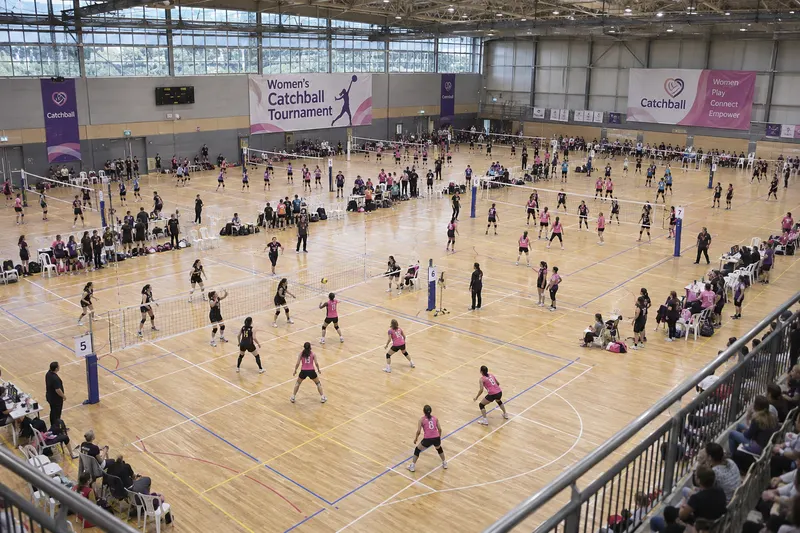 RelatedCatchball around the world in 2026: where it is played, by whom and under what name
Adapt by age
| Age | Net | Rules |
|---|---|---|
| 8–10 | Low or a rope | Catch with a bounce allowed, no hold limit |
| 11–13 | About 2 m | Three passes, short hold |
| 14+ | 2.24 m (girls) | Full rules: 1-second hold, steps, rotation |
Classroom tips
- Use soft balls for younger pupils.
- Make teams mixed in ability, and change them every lesson.
- Reward passing: a point bonus when all three contacts are different players.
- Invite a local Mamanet player or a pupil’s mother to demonstrate.
In Israel there is a youth catchball league with about 120 teams and 1,400 girls, so a school lesson can be the first step to a real team.
Frequently asked questions
Is catchball good for school PE?
Yes. It needs little equipment, every pupil touches the ball, and catching and throwing are easy to learn. It also prepares pupils for volleyball.
Enjoyed it? Share it with your team