In this article
| Catchball | Volleyball | |
|---|---|---|
| Court | 18 × 9 m | 18 × 9 m |
| Players on court | 6 | 6 |
| Contacts per side | Up to 3 | Up to 3 |
| Ball contact | Caught and thrown | Hit, may not be caught |
| Holding the ball | Up to 1 second | Not allowed |
| Women’s net height | 2.24 m | 2.24 m |
| Sets | Best of 3: 25, 25, 15 | Usually best of 5 |
Because the ball is caught, catchball is easier to learn, has longer rallies and suits players of every age. It also rewards tactics: with the ball in your hands for a moment, you can choose exactly where to throw.
Volleyball comparison based on standard FIVB indoor rules; catchball values from the ICF Official Catchball Rules 2022.
What feels different on court
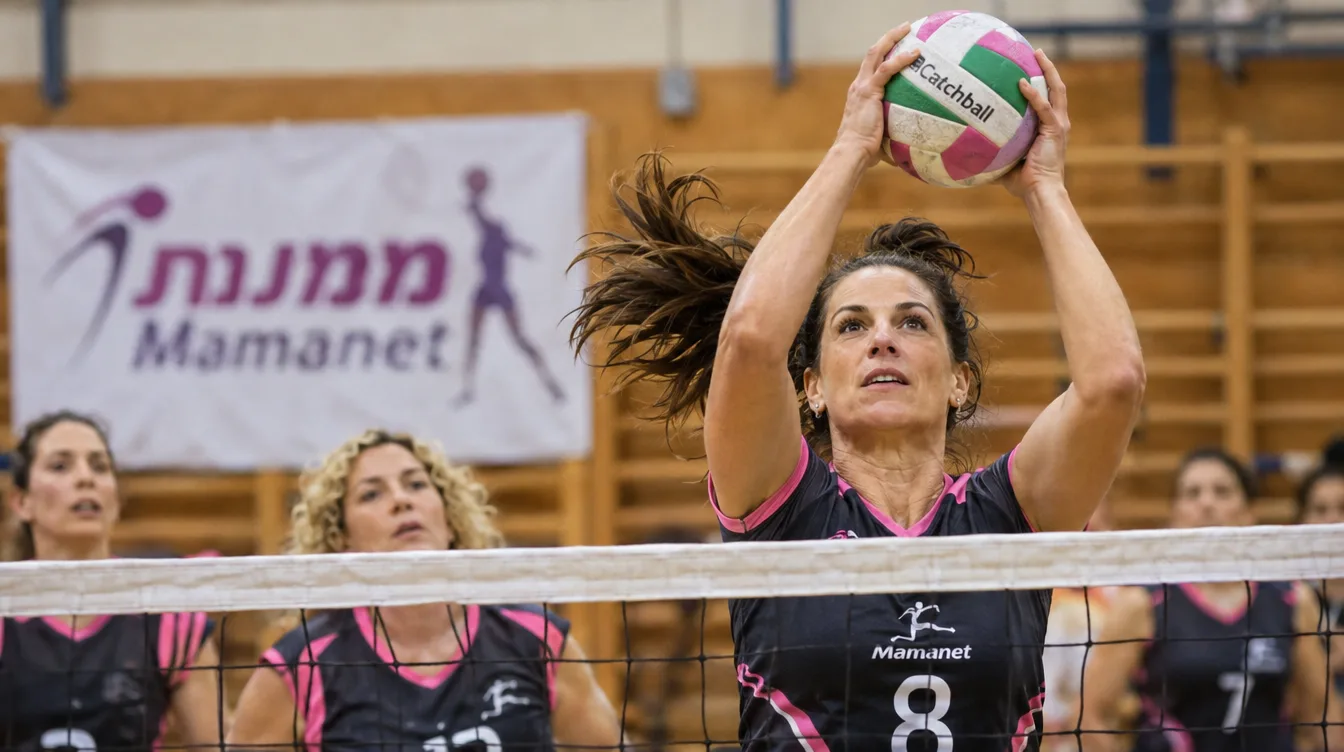
The biggest change is time. In volleyball the ball is in contact for a fraction of a second; in catchball you hold it for up to one second, which is long enough to look, decide and aim. That makes passing more accurate and turns attacks into placement battles rather than pure power.
Footwork changes too. A player may take one step with the ball before passing, or two steps before a jump throw, and must release before landing. Many faults for new players coming from volleyball are steps and holding, not net touches.
Which should you choose?
- Choose catchball if you are new to team sport, returning after years away or want a lower-impact game with long rallies.
- Choose volleyball if you want a faster, more explosive game and already have ball skills.
- Many former volleyball players move to catchball later; the court, rotation and tactics transfer almost directly.
 RelatedCatchball around the world in 2026: where it is played, by whom and under what name
A shared history
The two games were born in the same year. Volleyball was created in 1895 by William Morgan at a YMCA in Massachusetts; Newcomb ball, the ancestor of catchball, was invented by Clara Gregory Baer in New Orleans and published the same year. For three decades they were rivals in American schools before volleyball became the international sport.
Physical demands compared
| Aspect | Catchball | Volleyball |
|---|---|---|
| Impact on forearms and wrists | Low; the ball is caught | High; bump and set contacts |
| Jumping | Optional for most roles; used in attack and block | Frequent at most positions |
| Learning curve | Weeks to play real rallies | Months for consistent passing |
| Rally length | Longer, more touches per player | Shorter at beginner level |
| Typical players | Adults of all ages, especially women 30+ | Youth to adult, more competitive pathway |
Moving from volleyball to catchball
- Relearn patience: you can hold the ball, so look before you pass.
- Count your steps: one before a pass, two before a jump throw.
- Use your volleyball reading of the game; it transfers completely.
Frequently asked questions
Is catchball easier than volleyball?
It is easier to learn because the ball is caught and thrown, but it is still a competitive sport with tactics, attack throws and blocks.
Can volleyball players play catchball?
Yes. The court, positions and rotation are the same; the main adjustments are the one-second hold and the step limits.
Enjoyed it? Share it with your team